Do You Really Need a Human Graphic Recorder in the Age of AI?
I get this question a lot lately, and it's a fair one.
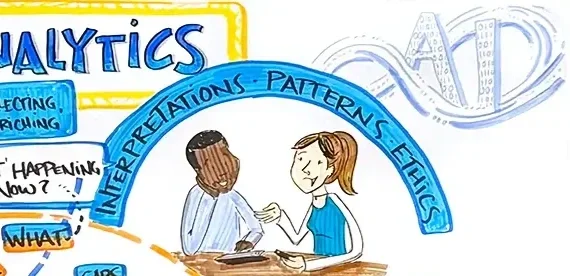
AI tools are getting better fast. They can transcribe, summarize, and generate visuals in seconds. So it makes sense to wonder: is a human scribe still worth it?
Here's what I've experienced when clients skip the conversation and go straight to the tool: they send content to an AI to summarize, get something back that looks “pretty good”, and send it to me to sketch. When I send a draft, it turns out the AI summary didn’t actually get what mattered most…And then we spend way more time reworking it than if we'd just started with intention. AI can support this work — but how we use it matters.
When we work together, I'm not just drawing. I'm listening to what's being said and how it's being said: the hesitation before a hard truth, the moment the room goes quiet, the offhand comment that turns out to be the heart of the whole conversation. Not all ideas carry equal weight in a room full of people. I'm making judgment calls about that constantly. AI treats every idea as equal because it can't feel the difference.
I'm also listening for what isn't being said. That's often where the most important stuff emerges, and it requires a human to recognize, ask a potentially difficult clarifying question, and visualize what is surfaced.
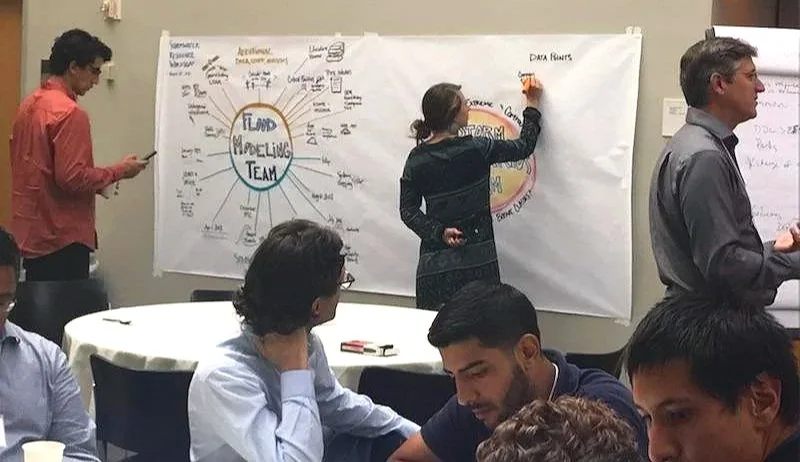
There's something else I can do that a tool simply can't: I can read the room. I can feel when energy shifts, when someone on the edge of the conversation has something valuable to contribute, when an idea needs to be named or visualized before the group can move past it. The visuals I create aren't canned, they're built from the specific language, culture, and dynamics of your group, emerging in real time as your conversation unfolds.
And there's an ethical dimension that I think about a lot. Whose voice gets amplified? Whose gets minimized? How does that relate to historical context? Sometimes the most important thing I do is give more visual weight to the quieter voices in the room, or make a judgment call about what not to draw. That requires values and situational awareness, not just processing power.
Finally: trust. People share more honestly when they feel seen. There's a something deeply human that comes from paper, ink, and a person physically creating in the space with you, something handmade that says I was paying attention to you. In an age of shrinking attention spans, that presence and focus is a gift to your group.
So yes — AI has a role. I use it too (Quick weeknight dinner ideas or brainstorming blog more titles for this post? Yes please). But for the moments that matter most in your event? I bet you still want a human in the room.
Thank you for your collaboration, humor, and what you do to make the world a better place.
Cheers,

Where in Colorado is ConverSketch?
It’s been a very busy month traveling around the Front Range of Colorado for different projects:
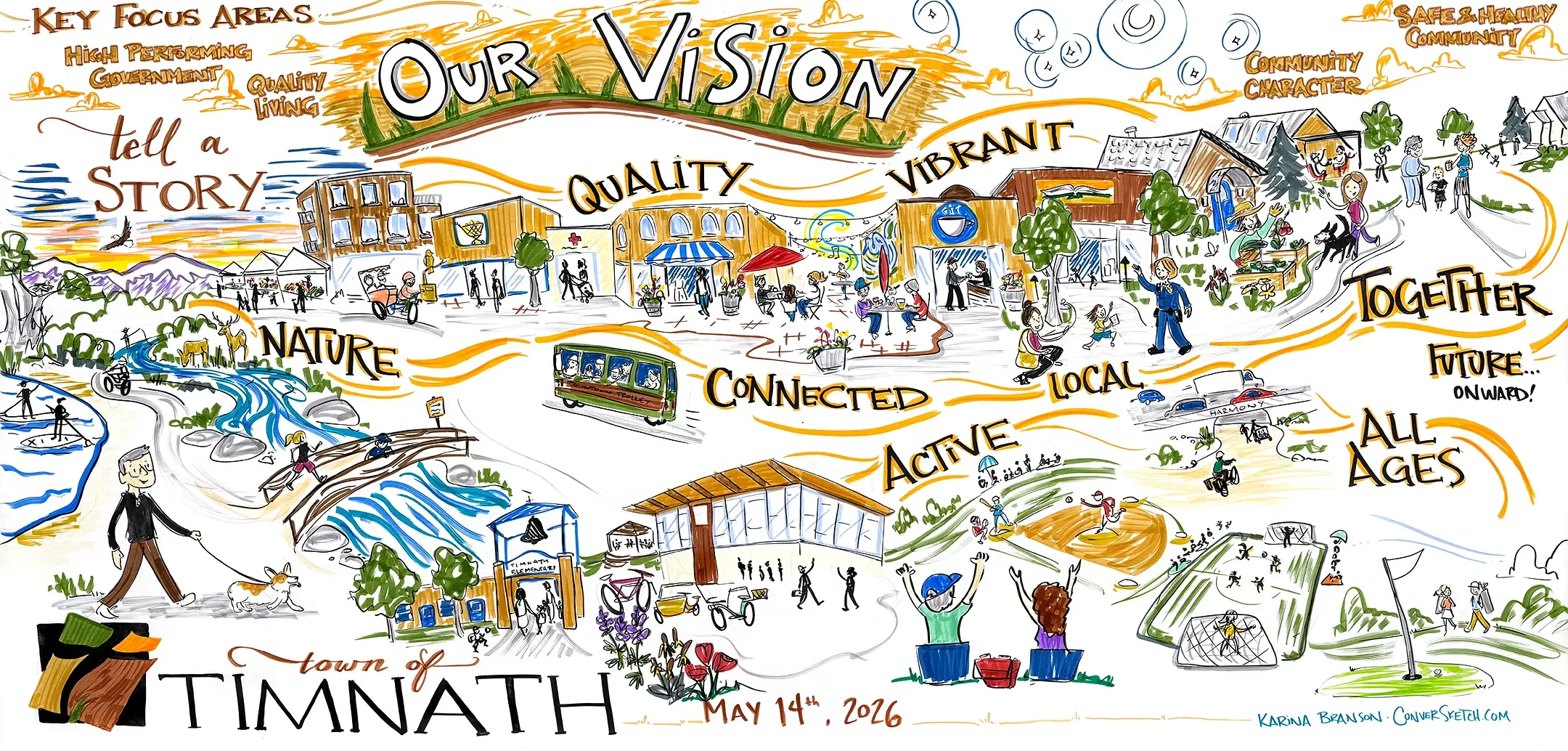
Timnath: Illustrating the vision for the community for the Town’s council and staff. This was created over 2 hours while listening to the group’s conversation.
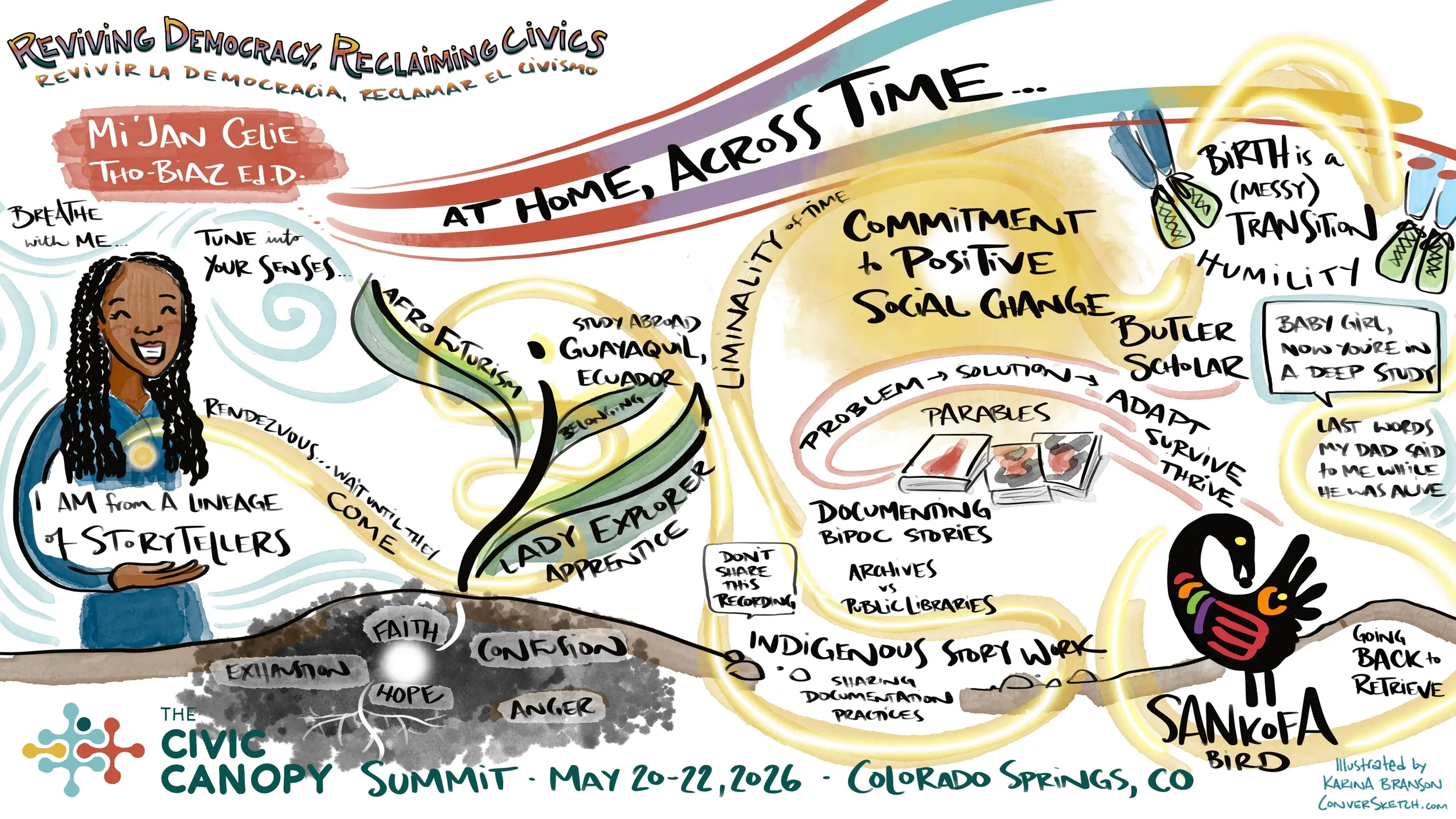
Colorado Springs: Creating digital graphics for the Civic Canopy, one of the most wonderful organizations in the Denver area. A highlight was the keynote from Mi’Jan Celie Tho-Biaz about culturally responsive and ethical storytelling.
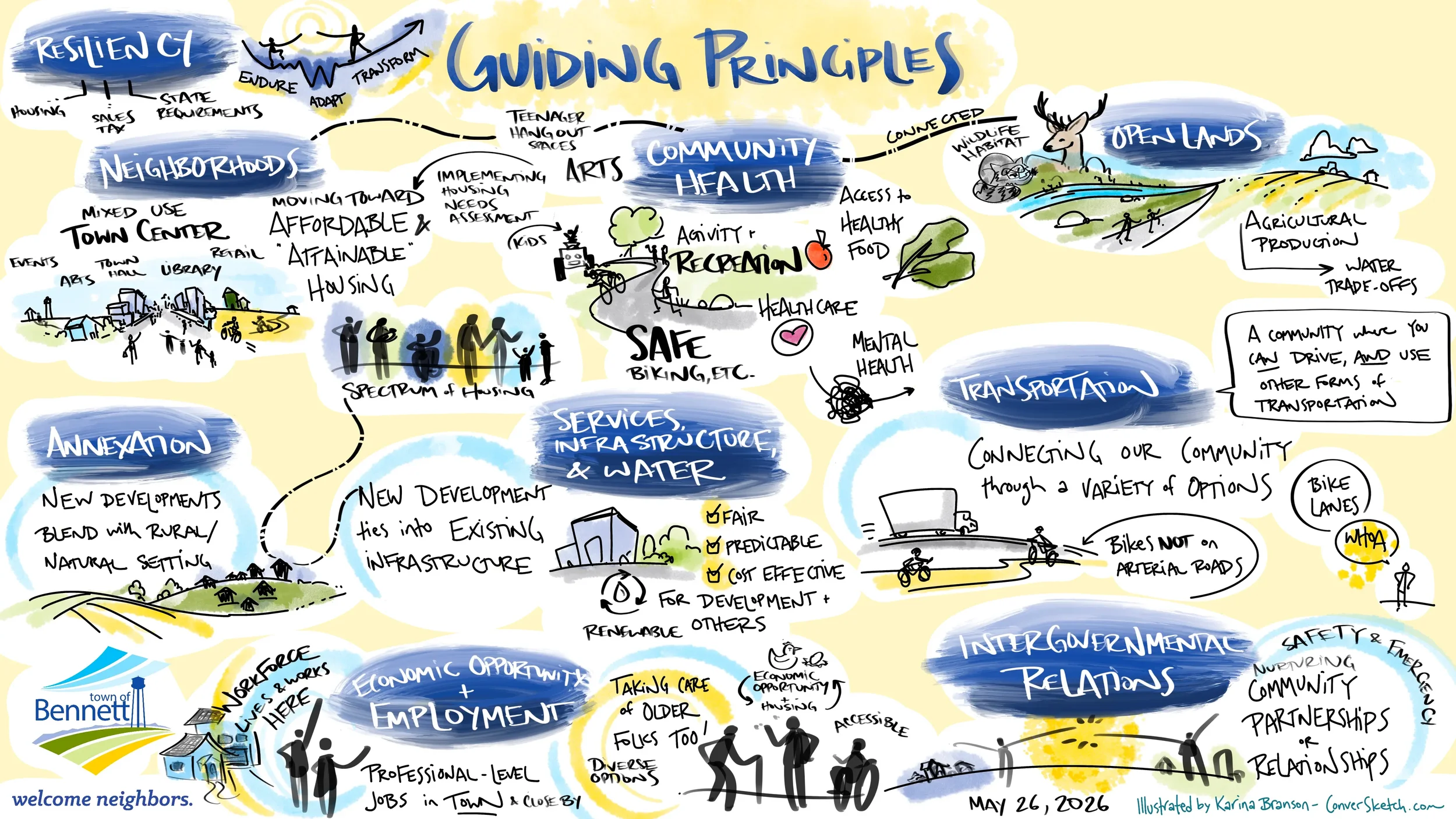
Bennett: Revisiting strategic work the Town Board and staff had created in 2021 to see what still fits and what needs to evolve as the community grows and changes.
Denver: Working with The Wilderness Society to create a vision for policy-making for America’s Public Lands, even in a time where federal government actions are, shall we say, less than supportive of environment and conservation efforts. Here is the title while we wait for sharing to be approved.