When the Drawing Is the Process: A Guide to Graphic Facilitation
Your meeting has a scribe. But does it have a guide?
If you’re reading this, chances are you’ve seen a graphic recorder in action: that person at the front of the room, markers flying, turning a keynote or panel discussion into a vivid visual mural in real time. It's captivating to watch, and the results speak for themselves.
But have you heard of a graphic facilitator? It's a related (and often confused!) role that does something quite different — and for the right meeting, it can be genuinely transformative. Let's dig in.
So, what is a graphic facilitator?
A graphic facilitator is a trained professional who leads a group through a structured process while creating visuals in real time. They're not just capturing what's being said — they're actively shaping the conversation. They ask questions, synthesize ideas, redirect energy when a discussion goes sideways, and use the emerging visual as a living tool to help the group think together.
Think of it this way: the visual isn't just the output. It is the process.
A graphic facilitator designs the session ahead of time, showing up with a plan for how visuals will help the group move toward a specific outcome — whether that's building a shared strategy, working through a thorny problem, or aligning a team around a new direction.
How is that different from graphic recording?
Great question! The key difference comes down to role.
A graphic recorder is a neutral observer. Their job is to listen deeply and capture what's happening — the big ideas, the energy, the emerging themes. They work alongside a facilitator or presenter, and their focus is on creating a rich, accurate visual record of the conversation. They're in service of the content.
A graphic facilitator is the facilitator. They hold the process, guide participation, and use visual tools as a primary means of moving the group forward. They're in service of the outcome. Both roles require deep listening and strong visual skills. But graphic facilitation adds a whole layer of group process expertise — knowing how to read a room, create psychological safety, draw out quieter voices, and keep energy alive across a long working session.
Read more about the difference here.
When should you work with a graphic facilitator?
This is where it gets exciting! Graphic facilitation shines when your group needs to actively make something together — not just hear about it or document it. Here are some situations where it's a great fit:
Strategic planning sessions where a team needs to co-create a shared vision or roadmap
Complex problem-solving when you're wrestling with a wicked challenge that doesn't have an obvious answer
Stakeholder alignment when you're bringing together people with different perspectives who need to find common ground
Workshop design where participants need to generate ideas, make decisions, and move to action — all in one session
Culture or values work that requires people to feel genuinely heard and invested in the outcome
If you're sensing that your group needs more than a scribe — that they need a thoughtful guide who can help them see their own thinking more clearly — graphic facilitation might be exactly what you're looking for.
The short version
Graphic recording captures a conversation. Graphic facilitation shapes one. Both are powerful. The key is knowing which one you need — and sometimes, the answer is both! (A graphic facilitator can bring in a graphic recorder to document the session while they focus on guiding the group.)
Curious about which fits your next meeting or event? I'd love to help you think it through. Hit reply and let's chat!
Thank you for your collaboration, humor, and what you do to make the world a better place.
Cheers,
Where in the World is ConverSketch?
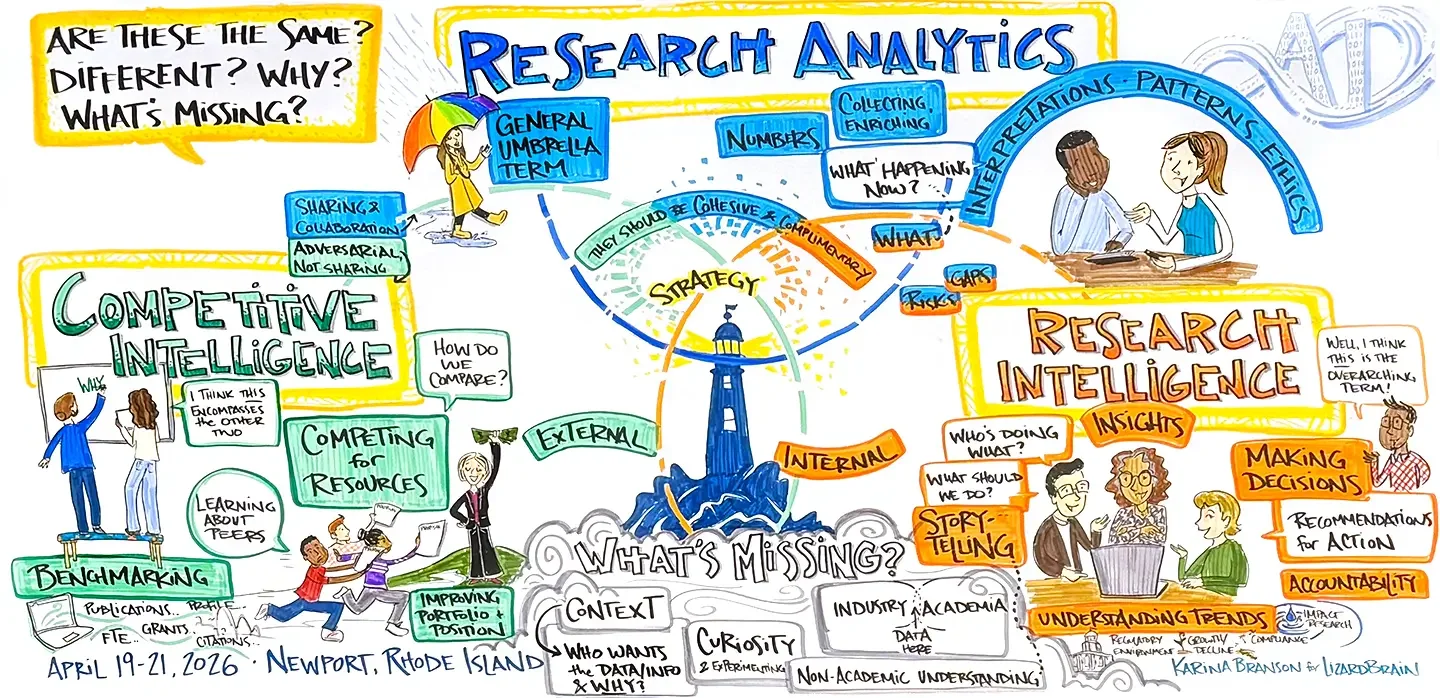
Newport, Rhode Island: At the Research Analytics Summit supporting university data analysts and librarians working toward ethical, informed use of data at their institutions. Here’s the Knowledge Wall I created while representing Lizardbrain at the event.
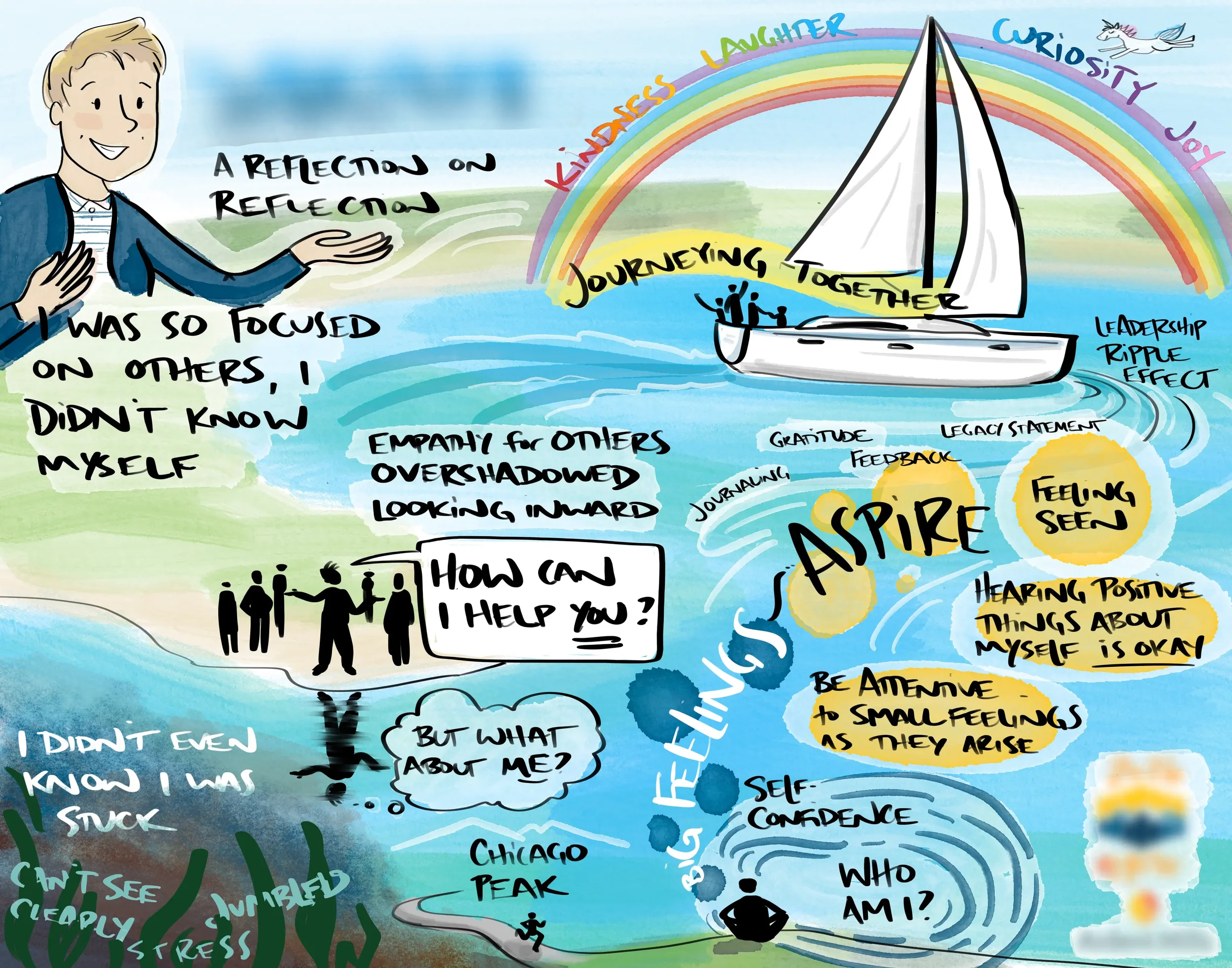
Working Remotely: Storytelling with participants at the end of a leadership program. I get to interview each participant for 30 minutes and create a refined and colorful leadership journey map by the end of the evening. Here’s what one participant said after working together:
“I wanted to drop you a note and thank you for how well your final drawing represented my journey! It was so perfect...and gave me the chills when I saw the final copy. Your talent is amazing and I really enjoyed our conversation. You felt like a trusted friend.
Thanks so much for sharing your talent and giving me this piece to treasure!”
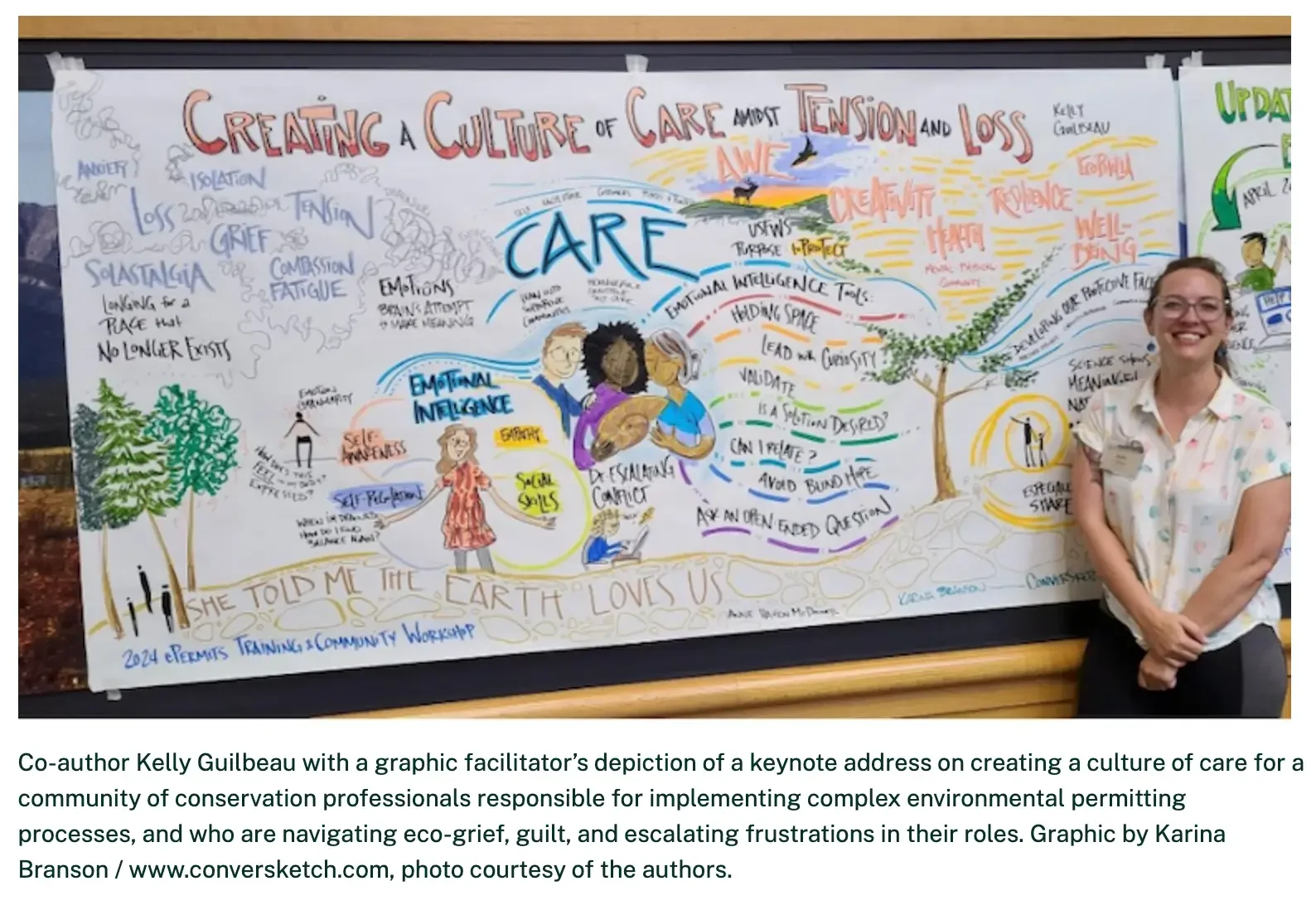
Graphics In the Wild Years Later: Kelly Guilbeau presented about mental health and building a culture of care during a retreat with the Fish and Wildlife Service ePermits team in 2024. The graphic was highlighted in this recent op-ed!